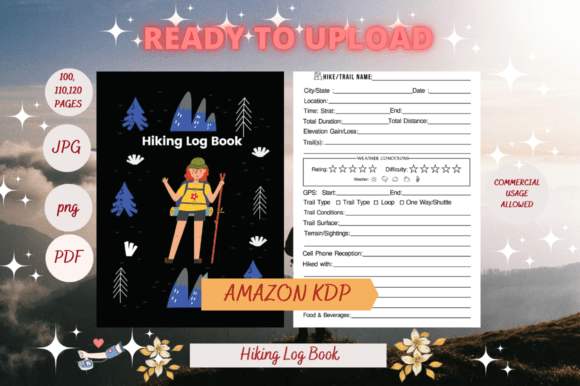
Hiking Log Book Design: Merging Utility with Aesthetics
Whether you're a seasoned trekker or a casual day-hiker, the act of documenting your journey transforms a simple walk into a curated narrative. A Hiking Log Book is more than just a notebook; it's a personal archive of adventure. From a graphic design perspective, this presents a fascinating challenge: creating a functional tool that also serves as a beautiful object. The best designs in this niche balance rugged practicality with visual appeal, making the logging experience itself a pleasure.
The Role of Design in Functional Journals
In the world of print and digital publishing, a product's success often hinges on its visual communication and user experience. A well-designed Hiking Log Book exemplifies this. Its layout must guide the user intuitively, presenting data fields like date, trail name, distance, and notes in a clear, scannable format. This is a core principle of UX design and visual hierarchy. The typography needs to be highly legible, perhaps pairing a clean sans-serif for headers with a durable serif or mono font for data entry. The color palette might draw from nature—earthy greens, slate grays, and sky blues—to reinforce the book's purpose without distracting from its function.
Beyond the Trail: Applications for Designers and Creators
The principles used to design a compelling log book are directly transferable to numerous creative projects. Understanding how to structure information for clarity and emotional impact is a valuable skill. For designers, marketers, and business owners, exploring niche products like these can spark inspiration for:
- Brand Identity & Packaging: Creating a cohesive look for outdoor brands that communicates durability and a connection to nature.
- Editorial Layouts: Designing magazines, guides, or catalogs where complex information (like trail maps or gear specs) must be presented elegantly.
- Digital Product Design: Developing app interfaces for fitness or travel tracking that prioritize ease of use and visual appeal.
- Marketing Materials: Crafting brochures, social media graphics, and presentations that tell a story about an experience or product.
For those looking to create or sell such items on platforms like Amazon KDP, the technical specifications are critical. A professional, print-ready PDF with correct dimensions (e.g., 8.5" x 11"), no bleed, and high-resolution graphics ensures the final product meets industry standards. Offering variations in page count (100, 110, 120 pages) caters to different user needs, demonstrating an understanding of your audience—a key aspect of marketing and user-centered design.
Practical Tips for Effective Visual Design
When selecting or creating design assets, whether for a log book or a broader brand system, consider these factors:
- Consistency is Key: Ensure all elements—from icons to typography—follow a unified style guide to strengthen brand identity.
- Readability Over Decoration: Choose typefaces and color contrasts that guarantee clarity, especially for functional items.
- Think in Systems: Design components that can scale. A logo that works on a tiny book spine should also look powerful on a website header.
- Audience Alignment: Your visual style should resonate with the end-user. A hiking journal might use textured backgrounds and adventurous motifs, while a corporate workbook would employ clean lines and neutral tones.
Ultimately, the most effective designs are those that feel inevitable—where every visual choice supports the user's goal. Investing in high-quality creative assets, whether for a specialized Hiking Log Book or a comprehensive brand overhaul, elevates the entire experience. It communicates professionalism, attention to detail, and a deep respect for the user's time and engagement, turning a simple tool into a cherished part of the journey.