Dream Journal: A Designer's Key to Unlocking Creative Potential
Every great design begins not with a blank canvas, but with a spark of inspiration. For graphic designers and creative professionals, capturing fleeting ideas, visual concepts, and innovative solutions is paramount to building a successful design workflow. This is where the practice of maintaining a Dream Journal becomes an invaluable tool, transforming subconscious creativity into actionable design assets. By systematically recording ideas, you create a personal repository of visual solutions, typography experiments, and color palettes that can fuel future branding, marketing, and editorial projects.
Why a Dream Journal is Essential for Modern Design
In the fast-paced world of graphic design, originality and efficiency are critical. A dedicated journal for capturing ideas serves as more than a notebook; it's a strategic component of your creative process. It allows you to:
- Build a Personal Design Library: Collect sketches, font pairings, and layout concepts that define your unique style.
- Overcome Creative Blocks: Revisit past entries to find solutions for current projects, from logo design challenges to UI/UX problems.
- Strengthen Brand Identity: Document brand guidelines, mood boards, and visual language explorations in one organized space.
- Enhance Visual Communication: Refine how you convey messages through imagery, typography, and composition by studying your own notes.
Practical Applications Across Design Disciplines
The utility of a well-maintained journal extends across every facet of visual design and digital marketing. Consider its application in these key areas:
- Branding & Logo Design: Sketch logo concepts, experiment with symbolic elements, and note color psychology insights to create cohesive brand identities.
- Marketing & Social Media Graphics: Plan campaign themes, storyboard social media content, and draft visual hooks that boost engagement.
- Web & UI Design: Wireframe interface ideas, note user flow improvements, and collect inspiration for modern aesthetics and visual hierarchy.
- Editorial & Packaging Design: Outline layout structures for magazines or books and brainstorm packaging concepts that stand out on shelves.
- Professional Presentations: Organize data visualization ideas, presentation flows, and key visual elements for impactful pitches.
Integrating Your Journal into a Professional Design Workflow
To maximize the value of your creative notes, consistency and organization are key. Treat your journal as a critical design asset. Use it to test typography pairings before applying them to a client's website or to experiment with color palette combinations for a new packaging project. The act of writing and sketching reinforces learning and sharpens your visual problem-solving skills, directly improving the quality of your digital products and creative projects.
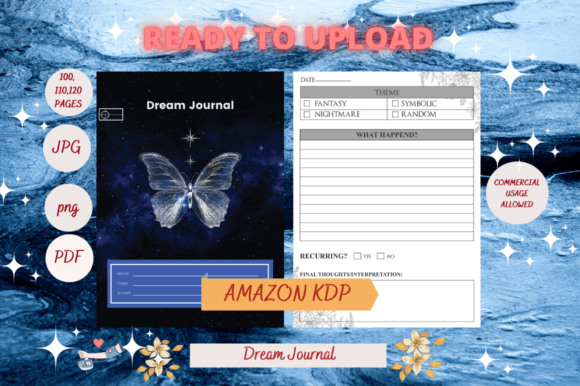
For those ready to systematize their creative process, professional resources are available. A high-quality, print-ready Dream Journal for KDP can provide the perfect structured foundation. These resources, often designed with specific dimensions like 8.5" x 11" and tested for no-bleed printing, offer a polished, professional template for your ideas. Having a ready-to-use PDF or PPT file ensures your journal is not just a collection of notes but a true design tool, compatible with your workflow whether you prefer digital annotation or traditional sketching.
Ultimately, thoughtful design choices are rooted in consistent practice and reflection. By investing in a system to capture your inspiration—whether through a custom notebook or a professionally prepared journal—you elevate your work from merely aesthetic to strategically effective. Quality creative assets, both the ideas you generate and the tools you use to record them, are the bedrock of compelling visual communication and a distinctive design portfolio.